Guide to Using Indigo Powder for Hair
People use indigo powder as a natural, chemical-free alternative to synthetic hair dyes. It helps achieve shades ranging from deep brown to blue-black. This powder comes from the Indigofera tinctoria plant and safely colours hair without ammonia or peroxide.
Most people think indigo powder is only used to colour hair. But it also offers additional benefits. It can help reduce dandruff, improve scalp health, strengthen hair roots, and add natural shine.
In this guide, we will explain how to use indigo powder for hair, its benefits, preparation methods, and tips to get the best results.
What Is Indigo Powder?
People have used indigo for centuries.
In the past, they called it “blue gold” because they used it to dye textiles.
Over time, people in India also started using it for hair care.
Even today, many people choose indigo powder as a safe, natural, and plant-based alternative to chemical hair dyes.
Manufacturers make indigo powder by soaking, drying, and grinding the leaves of the indigo plant. Most people use it in a two-step process.
First, they apply henna to their hair. Then, they apply indigo powder to achieve dark brown or natural black shades.
Indigo powder also works as a natural conditioner. It makes hair smooth, adds shine, and improves texture. Some people believe it may help slow down premature greying and support overall scalp health.
How to Prepare Hair Before Applying Indigo
Proper preparation helps you get better colour results. When you prepare your hair the right way, the colour looks richer and lasts longer
Clean hair absorbs colour better. When your hair is free from oil and product build-up, indigo sticks properly and gives a deeper, longer-lasting shade.
Follow These Steps:
1. Wash your hair with a mild shampoo.
Use a gentle shampoo to remove dirt, sweat, and product build-up.
2. Do not use conditioners.
Avoid conditioner before applying indigo. The conditioner creates a smooth layer on the hair and prevents the colour from sticking properly.
3. Make sure your hair is clean and oil-free.
Oil blocks the colour. Indigo works best on clean, oil-free hair.
4. Let your hair dry completely or keep it slightly damp.
You can apply indigo on dry or slightly damp hair. Do not apply it on dripping wet hair.
5. Comb your hair to remove tangles.
Smooth, tangle-free hair helps you apply the paste evenly.
How to Use Indigo Powder (Step-by-Step)
You must always mix indigo powder just before applying it. Fresh paste gives better colour results.
For Brown Shade (After Henna)
If you want a brown shade, follow this method:
-
Apply henna to your hair first.
-
Rinse your hair with plain water. Do not use shampoo.
-
Mix fresh indigo powder with warm water to make a smooth paste.
- Apply the indigo paste immediately to your hair.
- Leave it on for 1–2 hours.
-
Rinse your hair with plain water.
This method gives you a rich brown shade.
For Black Shade (Two-Step Method)
If you want a natural black colour, follow these steps:
Step 1: Apply henna to your hair.
Step 2: Rinse with water and let your hair dry.
Step 3: Mix fresh indigo powder with warm water and make a smooth paste.
Step 4: Apply the fresh indigo paste immediately.
Step 5: Leave it on for about 2 hours.
Step 6: Rinse your hair with plain water.
This two-step method gives a deep, natural black colour.
Important:
Always prepare indigo paste right before you apply it. Do not store the paste for later use. Fresh indigo works best and gives darker, longer-lasting results.
Touch-Up Tips for Grey Roots
Grey roots need regular care. These simple tips help you maintain even colour and keep your hair looking fresh.
Follow These Steps:
1. Apply indigo only on grey roots.
You do not need to apply it on your hair every time. Focus only on the new grey growth.
2. Leave it on for 1–1.5 hours.
This gives enough time for the colour to develop properly.
3. Do a root touch-up every 3–4 weeks.
Most people notice new grey growth within a month. Regular touch-ups help maintain an even colour.
4. For stubborn greys, apply henna on the roots first.
Some grey hair does not catch indigo easily. In that case, apply henna first, rinse it, and then apply fresh indigo paste. This helps the colour hold better.
What to Expect
Natural colour fades slowly and softly over time. It does not fade in harsh patches like chemical dyes. This makes your hair look more natural even as the colour lightens.
How to Make Indigo Color Last Longer
Good aftercare helps your colour stay rich and fresh for a longer time. Follow these simple tips to protect your indigo-treated hair.
Simple Tips:
1. Avoid shampoo for 24–48 hours after application.
Let the colour settle properly. Washing too soon can lighten the shade.Explore natural
2. Use a mild, sulfate-free shampoo.
Strong shampoos fade natural colour faster. Choose a gentle shampoo to protect the shade.
3. Oil your hair lightly once or twice a week.
Light oiling keeps your hair soft and healthy. Healthy hair holds colour better.
4. Avoid frequent washing.
Wash your hair only when needed. Too much washing makes the colour fade faster.
5. Avoid strong chemical treatments.
Chemical dyes, bleaching, or harsh treatments can damage the colour and dry out your hair.
6. Protect your hair from too much sun.
Strong sunlight can slowly fade natural colour. Cover your hair with a scarf or hat when you stay outside for long hours.
Common Mistakes to Avoid When Using Indigo Powder
Many people feel confused when they use indigo powder for the first time. Avoid these common mistakes to get better colour results.
1. Mixing Indigo Too Early
Do not mix indigo hours before applying it. Indigo works best when fresh. Always prepare the paste just before use.
2. Storing Indigo Paste
Do not store leftover indigo paste. It loses its colouring power quickly. Fresh paste gives darker and better results.
3. Using Conditioner Before Application
Do not apply conditioner before using indigo. The conditioner creates a smooth layer on the hair and blocks the colour from sticking properly.
4. Expecting Black Colour Without Henna
Indigo alone cannot give a deep black shade on grey hair. You must apply henna first if you want a natural black colour. Henna creates the base that helps indigo develop properly.
5. Washing with Shampoo Immediately
Do not shampoo your hair right after applying indigo. Wait at least 24–48 hours. Early washing can lighten the shade.
Why Choose Our Indigo Powder?
When you choose indigo powder for your hair, purity matters. The quality of the powder directly affects the colour, shine, and overall results. That is why we offer indigo powder that is carefully sourced, freshly processed, and packed to maintain its natural strength.
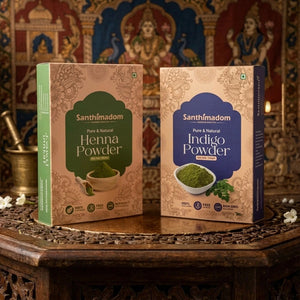
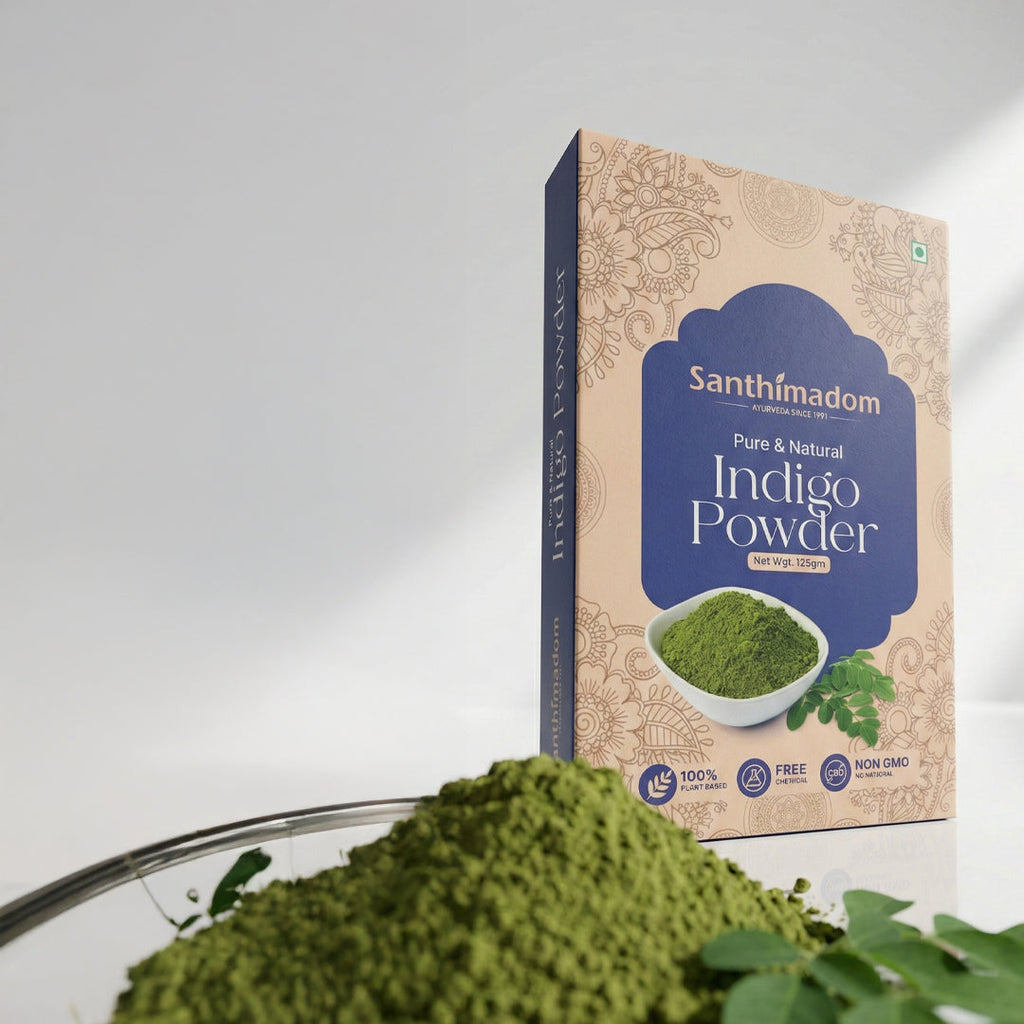
Indigo powder produced by Santhimadom is 100% pure and plant-based. We do not add chemicals, artificial dyes, or harmful ingredients. It contains no PPD, no ammonia, and no synthetic colour boosters. You get only finely ground indigo leaves ; nothing else.
We sift our powder finely to give you a smooth, lump-free paste. This makes application easy and helps the colour spread evenly from roots to ends. Because we use fresh crop indigo, the powder releases a strong, rich colour when you mix it just before use. The result is deep brown to natural black shades that look soft, natural, and healthy.
We also pack our indigo powder in airtight packaging. This protects the powder from moisture and air, so it stays fresh and effective until you open it.
For the best results, pair our indigo powder with our pure henna powder. Henna builds a strong natural base, and indigo adds depth and darkness. Together, they give beautiful, chemical-free hair colour without damage.
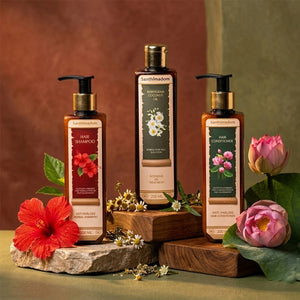
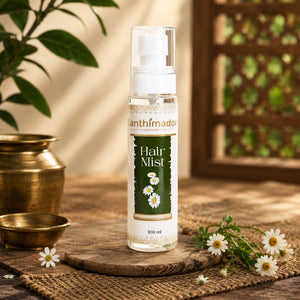
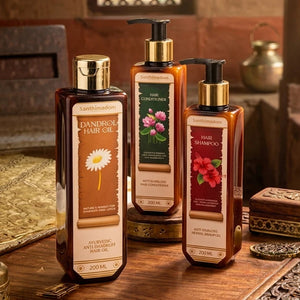
Beyond indigo and henna, we offer a carefully selected range of Ayurvedic hair care products. Our collection supports scalp health, improves shine, and strengthens hair roots using traditional herbal ingredients.
If you want natural colour, healthy shine, and trusted quality, choose pure indigo powder that works gently and effectively ;the natural way.
-
Posted in
Indigo Powder